
OEM procurement
Custom Solar Panels: An OEM Buyer’s Guide to Specifications & Quotes
Prepare a custom solar panel RFQ for RV, caravan or OEM projects: dimensions, power, frames, cables, samples, model documents and wholesale quotation requirements.
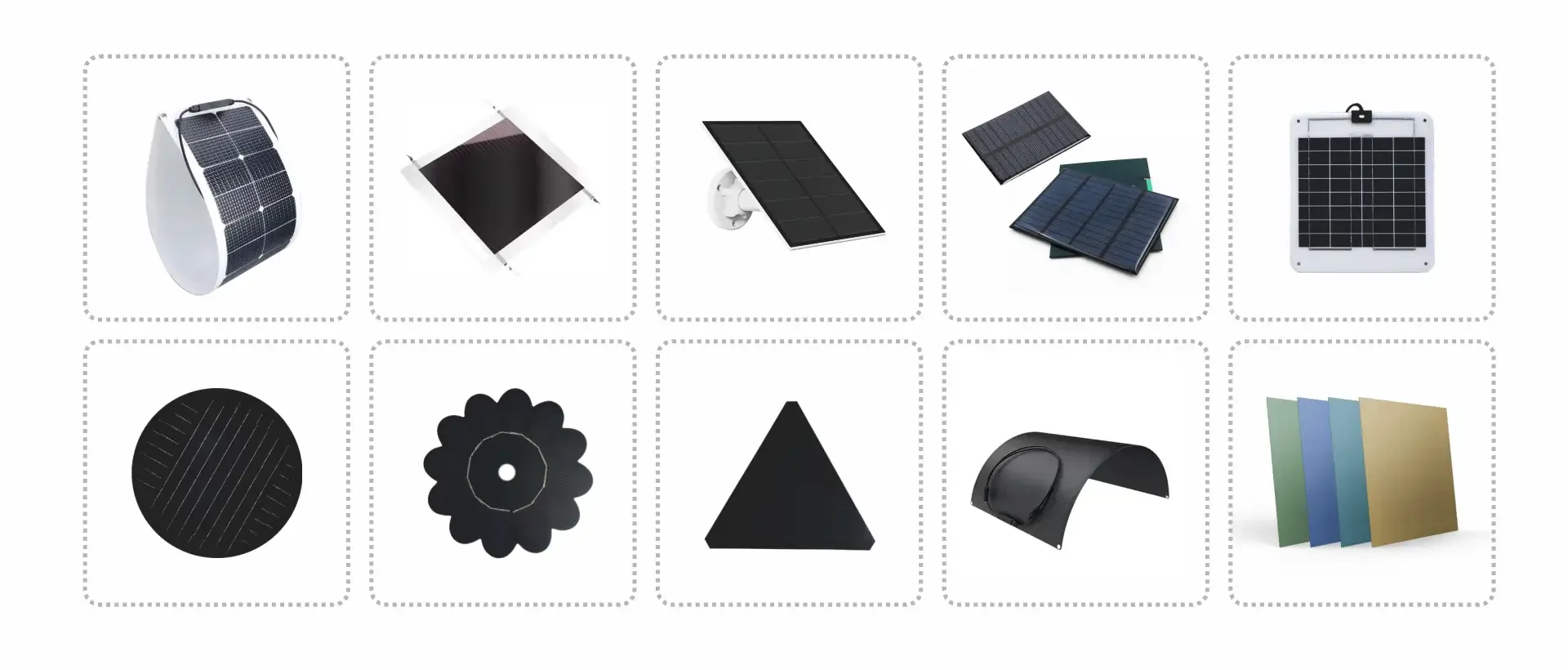
Buyer takeaway: A useful custom solar panel quotation starts with the product you are building, rather than a wattage alone. Tell Auriva Energy whether the module is for a caravan roof, a marine surface, portable equipment or another OEM application. Include the destination country, sample quantity, expected production volume and required delivery date. Our engineers can review the module layout against your installation envelope and electrical requirements. Feasibility, pricing and supply terms are confirmed for the proposed configuration.
1. Start with the application and purchasing brief
A useful custom solar panel quotation starts with the product you are building, rather than a wattage alone. Tell Auriva Energy whether the module is for a caravan roof, a marine surface, portable equipment or another OEM application. Include the destination country, sample quantity, expected production volume and required delivery date. Our engineers can review the module layout against your installation envelope and electrical requirements. Feasibility, pricing and supply terms are confirmed for the proposed configuration.
2. Specify dimensions and the usable installation area
Provide maximum length, width, thickness and weight, with units and any required tolerances. Send a dimensioned drawing and mark mounting points, prohibited zones, cable entry and access requirements. For RV roofs, include vents, skylights, air conditioners, obstacle heights and curved areas. Compare the complete installed envelope, including brackets, ventilation and junction-box clearance. Custom dimensions can improve physical fit, but they do not guarantee a particular power output.
3. Define the electrical targets and connected equipment
State the target rated power, required operating-voltage range, battery nominal voltage and exact controller or inverter model. Request the proposed module’s Pmax, Vmp, Imp, Voc and Isc, together with the stated test conditions and temperature coefficients. If modules will be wired in series or parallel, provide the planned arrangement. The system designer must check controller input limits and temperature effects; describing a panel as 12V or 24V alone is not enough to establish compatibility.
4. Compare construction, custom frames and flexible formats
Choose the starting construction around weight, stiffness, curvature, mounting and handling needs. For framed modules, provide the desired frame cross-section, height, finish, fixing interfaces and drainage requirements. For flexible solar panels, request the permitted bending radius, substrate and attachment instructions for the proposed model. Flexible, foldable and walkable are different properties. Confirm each requirement with the selected construction rather than relying on a product photograph.
5. Specify cables, connectors and OEM appearance
Mark the junction-box location, cable exit direction, cable length and connector requirements on the drawing. Confirm cable size, polarity, mating connector and complete assembly ratings with the system design. Supply artwork for the proposed logo, label and packaging, and identify the drawing revision that requires approval. Branding and dimensional changes must be reviewed against the scope of the supporting model documents.
6. Compare quotations on the same technical scope
Ask each quotation to identify the exact model, construction, drawing revision, module ratings, quantity, sample cost, tooling scope if applicable, packaging, freight terms and delivery destination. Confirm production readiness separately from transport time. MOQ, sample availability, lead time and warranty vary by configuration and are agreed in writing. A lower unit price is not directly comparable when the module, documents or delivery scope differ.
7. Review samples and market documents before production
Agree a sample acceptance plan covering dimensions, physical fit, cable polarity, appearance and electrical data under stated conditions. Request datasheets, installation instructions and the certificates or reports required for the exact model and destination market. Do not assume an Australian or European approval covers a changed construction or new brand. Keep the approved sample, drawing revision and production specification aligned, and obtain written agreement for later changes.
8. Send the RFQ for an Auriva engineering review
Prepare a drawing, application description, dimensional limits, electrical targets, mounting details, cable requirements, destination and quantities. Download the project RFQ worksheet below and use it to organize your requirements. Submit your enquiry with a PDF, JPG, PNG or WebP drawing through the contact page, or email sophie@auriva-energy.com. Auriva can review the starting specification and provide a project quotation for your reference.
Download your custom solar panel RFQ worksheet
Use the worksheet to organize your dimensional, electrical, mounting and purchasing requirements. It is a project brief, not a model datasheet.
Download the project RFQ worksheet ↗ Send your custom solar panel enquiry ↗ Compare RV solar panels ↗
Frequently asked questions
Can Auriva manufacture solar panels in custom dimensions?
Auriva reviews custom dimensions, frames, cables and OEM branding against the application and construction. Send a drawing and electrical targets. The feasible size, rated output, sample scope and production terms are confirmed in the proposal.
What information is needed for a custom solar panel quote?
Provide the application, destination, available dimensions, target power, connected equipment, mounting method, cable and connector requirements, sample quantity and expected order volume. Include a drawing where possible.
What is the minimum order quantity for OEM solar panels?
MOQ depends on the module construction, customisation and production scope. Auriva confirms sample and production quantities, costs and lead time in the written quotation.
Can custom panels help use limited caravan roof space?
They may help when standard dimensions leave unused areas around roof equipment. Compare feasible layouts with mounting clearances, shading, weight and electrical compatibility before approving a design.
Does changing the logo preserve an existing certificate?
Do not assume it does. Review the exact model, certificate holder, brand, construction and covered scope, and confirm the documentation needed for the destination market.
Continue your project review
Explore the related product ↗ Request model documents ↗ All technical articles ↗
AURIVA ENERGY
A specification we can review together.
Send the model, application, destination and required quantity.