
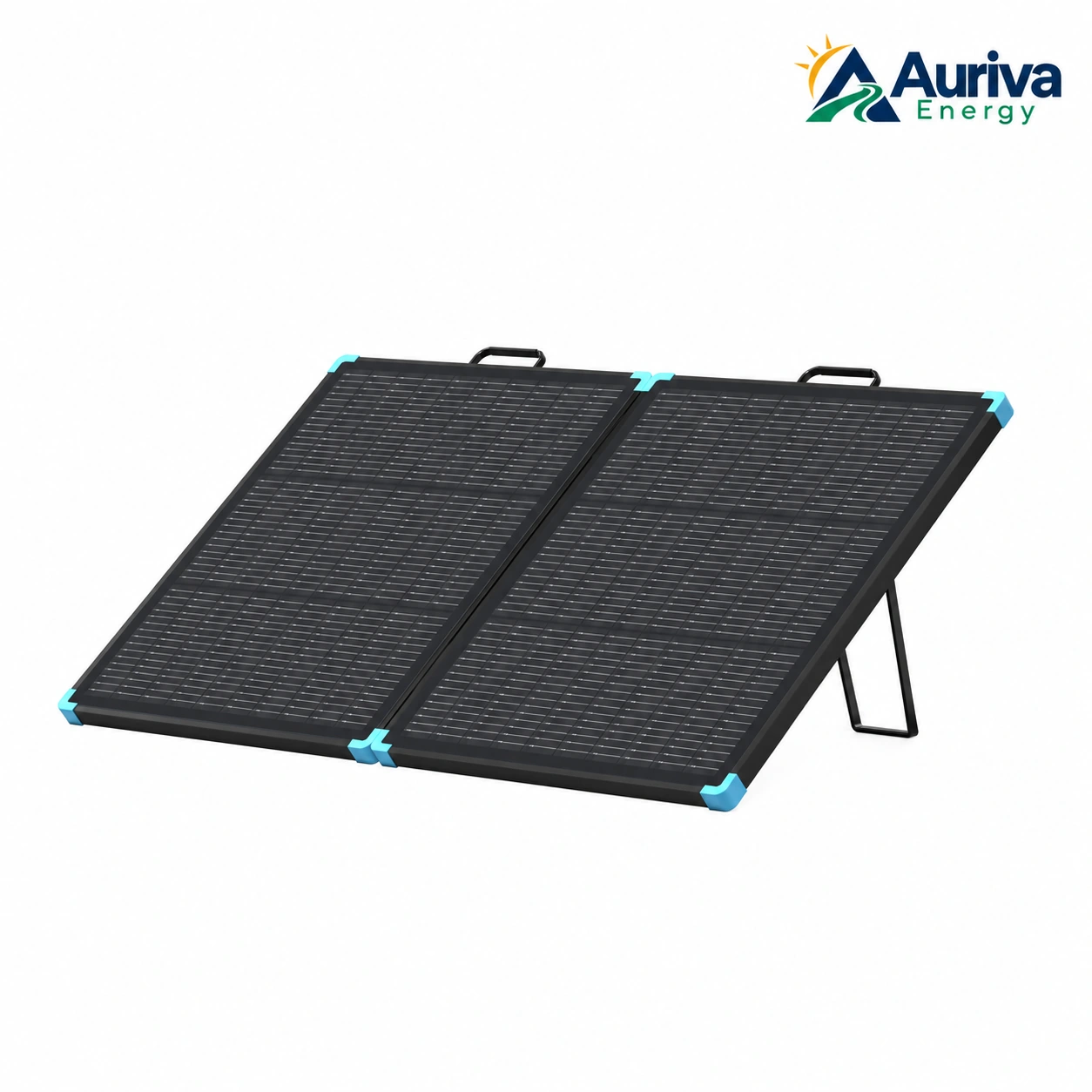
Portable suitcase
Portable Solar Suitcases
Folding solar suitcases with support stands. Compare deployed area, packed dimensions and weight across four power configurations.
View specifications →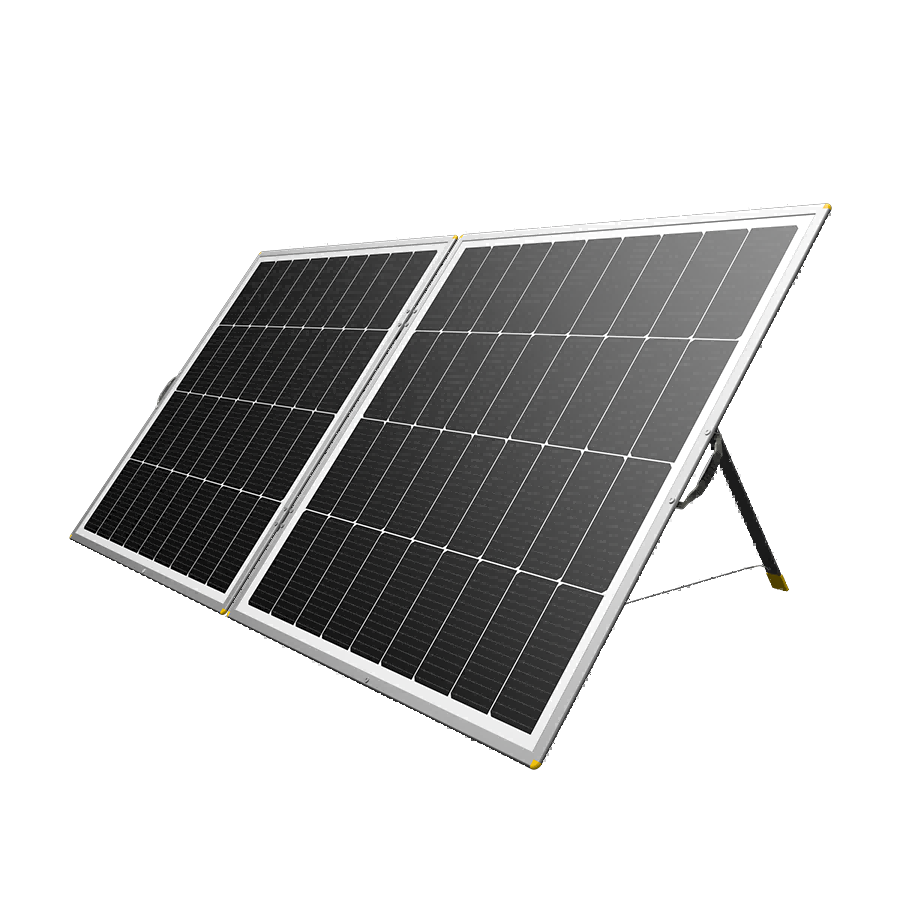
SOLAR MODULES
Compare portable solar suitcases, blankets and folding panels for camping and RV use. Request model specifications, connector matching and wholesale pricing.
Reference module range · 35–480 WChoose a portable solar setup around the battery or power station you intend to charge. Connector type and electrical compatibility matter as much as module output.
Confirm model ratings and installation details against the selected product documentation.
APPLICATION & SELECTION
Camping, vehicle travel and temporary outdoor charging.
A portable setup combines a deployed solar area with a practical transport format. Match folded size, handling needs and cable reach to the way the panel will be stored, moved and positioned during use.
The receiving battery or power station is part of the specification. Send its exact model and PV input information so voltage, current, polarity and connection details can be reviewed alongside the solar module.
AURIVA ENERGY · PRODUCT SERIES
Choose a series, compare power configurations and review the complete specification on its product page.
Portable suitcase
Folding solar suitcases with support stands. Compare deployed area, packed dimensions and weight across four power configurations.
View specifications →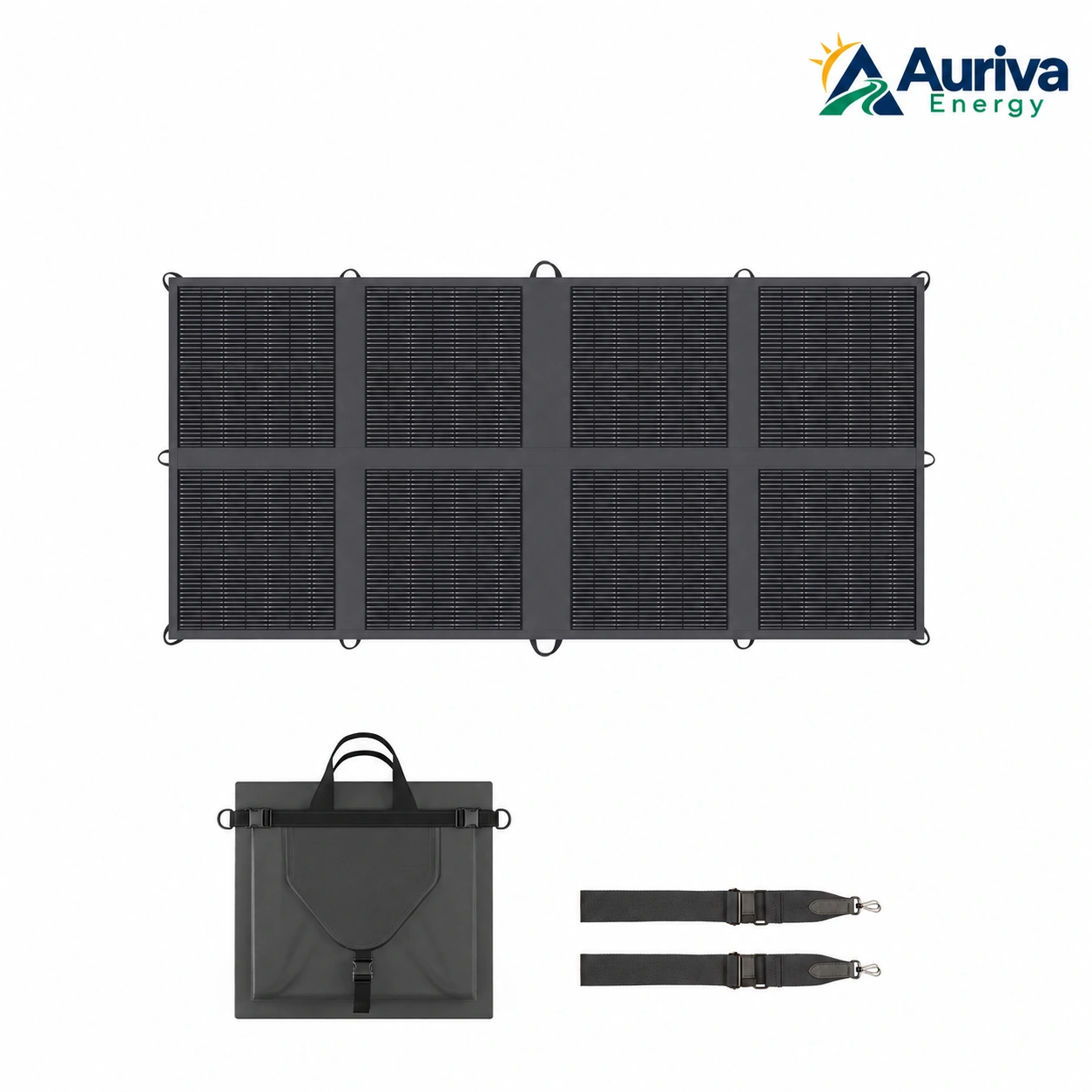
Solar blanket
Packable 200W and 400W N-type solar blankets for campsite and mobile charging. Check the receiving equipment’s voltage, current and connection requirements.
View specifications →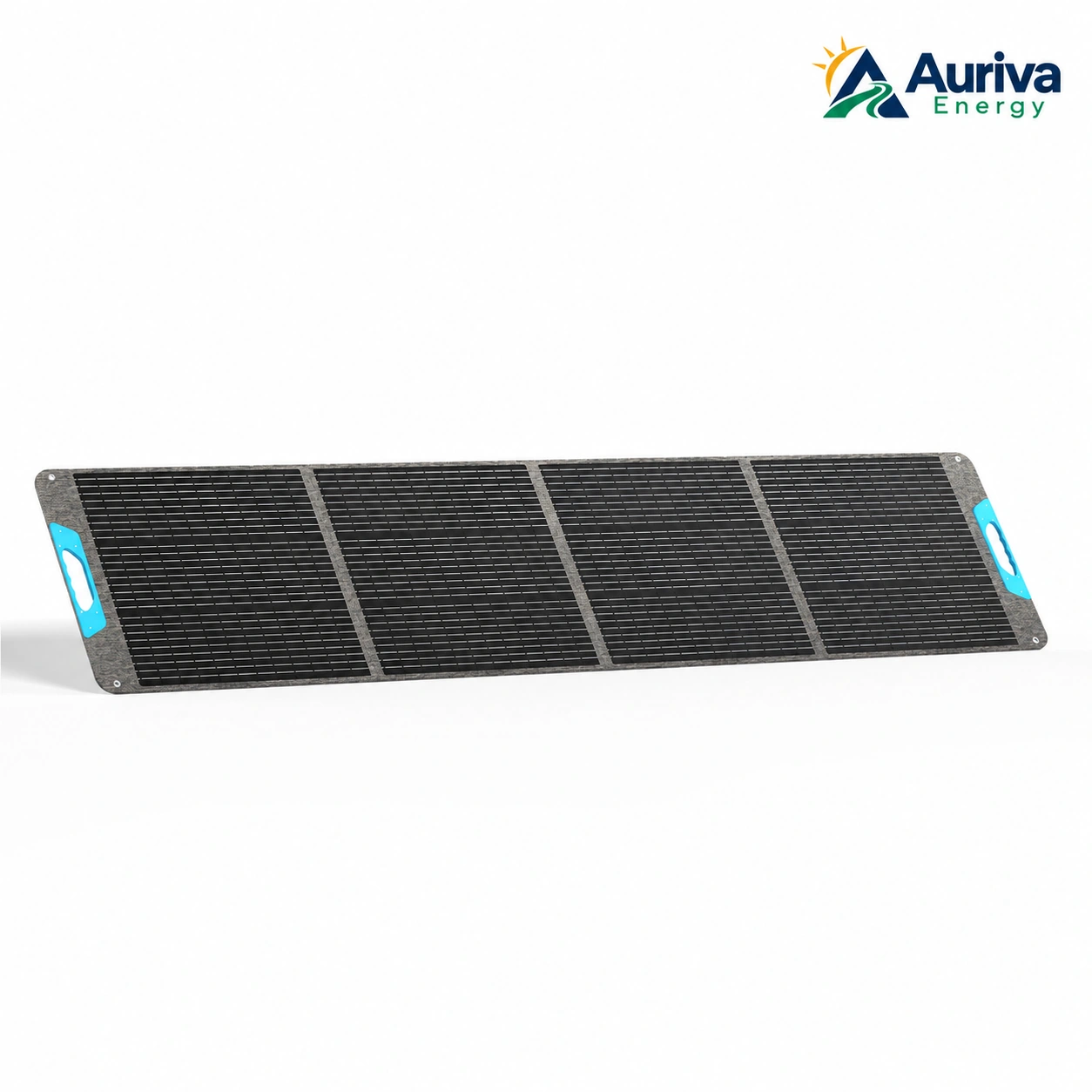
Foldable
100W and 200W portable folding options. Review carrying size, cable reach and receiving equipment compatibility.
View specifications →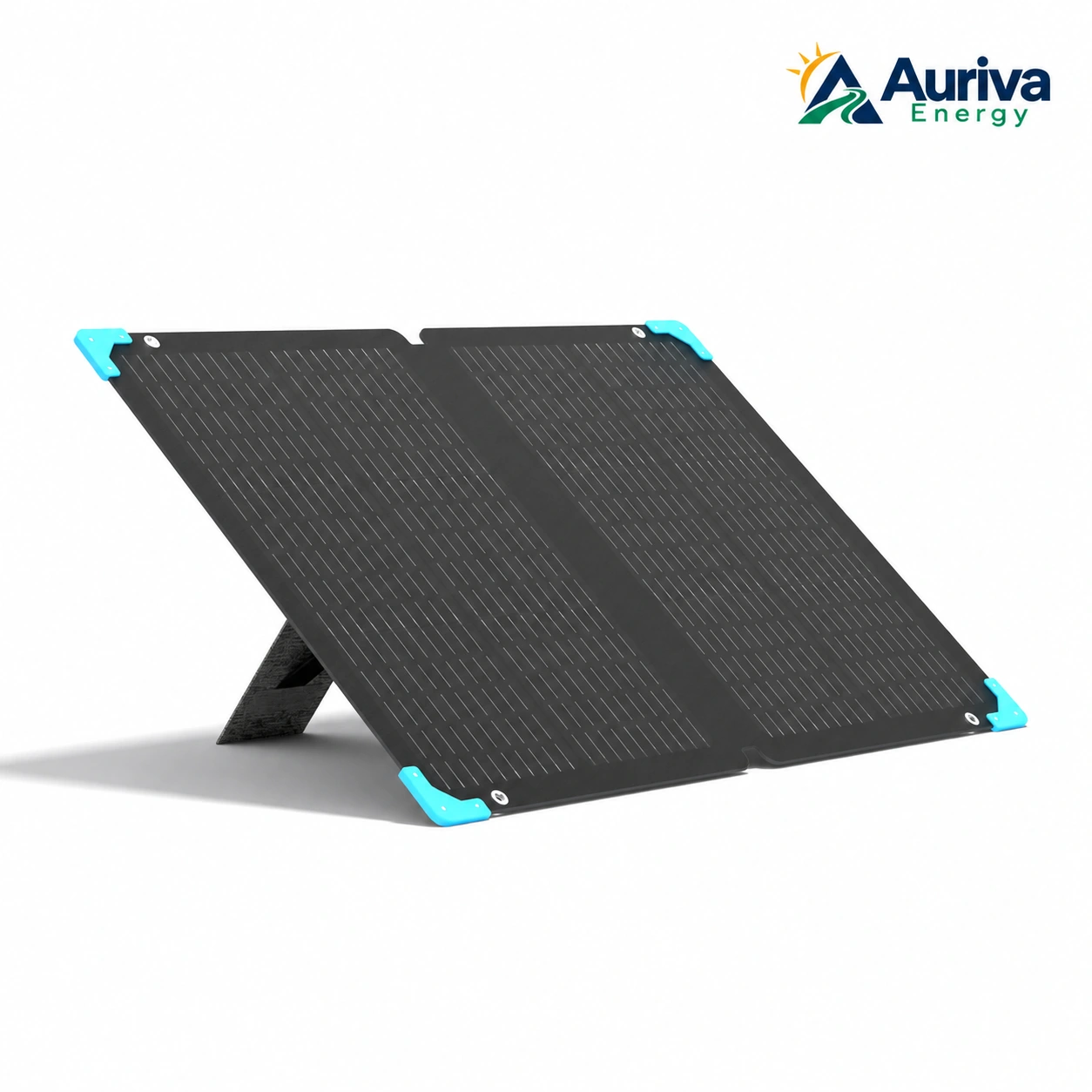
Foldable
An 80W two-section portable module for mobile charging, selected around transport space and the connected equipment.
View specifications →No series match. Reset the filters or share your requirements.
WHY THE FORMAT MATTERS
Compare packed dimensions and weight with your vehicle, storage compartment and intended handling routine.
Confirm the receiving device input limits and connection details before choosing module power.
Plan an unobstructed position and enough cable reach to keep the receiving equipment in its intended operating environment.
KEY PARAMETERS
These are family-level selection details. Exact ratings, dimensions and supplied components are confirmed against the selected model documents.
Family reference range
35–480 W
| Parameter / design input | What to confirm |
|---|---|
| Rated power (Wp) | Define the required charging output. |
| Folded dimensions | Confirm transport and storage space. |
| Output voltage & current | Match the receiving device's permitted PV input. |
| Connectors & cable | Confirm connector type, polarity and cable length. |
| Use conditions | Request operating and handling instructions. |
MODULE CONFIGURATION
Include these inputs in the model and drawing review.
| Parameter / design input | What to confirm |
|---|---|
| Folded & deployed dimensions | Request both footprints, total weight, folding layout and carrying arrangement for the selected product. |
| Support & positioning | Confirm the supplied support or stand, permitted angle adjustment and instructions for deployment. |
| Module electrical data | Request Pmax, Vmp, Imp, Voc and Isc for the exact size and cell configuration. Rated watts alone do not establish equipment compatibility. |
| Array & connected equipment | Provide series / parallel layout and the controller, inverter or power-station model. Check its PV voltage window, startup requirements and current limits. |
| Temperature & test conditions | Review temperature coefficients and the intended operating environment. Nameplate values are reference test values; installation output varies with site conditions. |
| Connections & accessories | Agree connector and adapter models, polarity, cable length and exactly which accessories are included. |
| Weather exposure | Request the permitted operating, storage and exposure conditions for the panel, junctions and any included electronics. |
INSTALLATION & VALIDATION
Use the selected model’s instructions and an agreed project design.
Position the deployed panel away from passing shadows where practical, and review orientation as conditions change.
Use the confirmed adapter and polarity. Check the equipment input specification before combining multiple panels.
Confirm the folding sequence, cleaning method and dry-storage guidance for the selected product.
SHADE & SYSTEM MATCHING
Partial shade can change a module’s operating point. Bypass paths may allow current around an affected cell group, while reducing the module’s available output. The response depends on the electrical layout and the connected equipment.
Vents, aerials and rooftop equipment.
Branches or nearby structures as the sun moves.
Structures near the intended installation.
Illustrative shadow positions only. These sketches do not show a model’s cell wiring, bypass topology or measured output.
CUSTOM EVALUATION OPTION
For installations with recurring shadows, include a shade review in the module enquiry. A shade-tolerant electrical configuration can be discussed as a custom requirement; availability, bypass layout and performance must be confirmed for the proposed model and test conditions.
Discuss shade requirementsShade tolerance does not guarantee full rated output under shade. Prioritize a suitable layout and validate the complete system.
TECHNICAL RESOURCES
Download available resources or request model-specific documentation.
Selection guides explain what to confirm. A model datasheet or installation manual defines the chosen product.
PRODUCT FAQ
Clear answers for your specification and quotation.
Compatibility is device-specific. Provide the power station model, allowed PV voltage and current, connector and polarity. An adapter alone does not establish electrical compatibility.
Ask for the selected product use instructions. Temporary outdoor use, permanent exposure and weather resistance are different requirements; the panel and its included electronics may have different limits.
Wattage describes module power under stated test conditions. Daily energy also depends on sunlight, orientation, temperature, shading and system operation. Provide the location and daily loads so the project can be assessed.
Ask for the model datasheet, dimensioned drawing, electrical values and installation instructions. Confirm the scope of any test report, certification or warranty against the exact model, destination and purchase agreement.
A CLEARER PRODUCT ENQUIRY
Send your application and requirements to Auriva Energy for the next product discussion.
Prepare a product enquiryDownload RFQ worksheet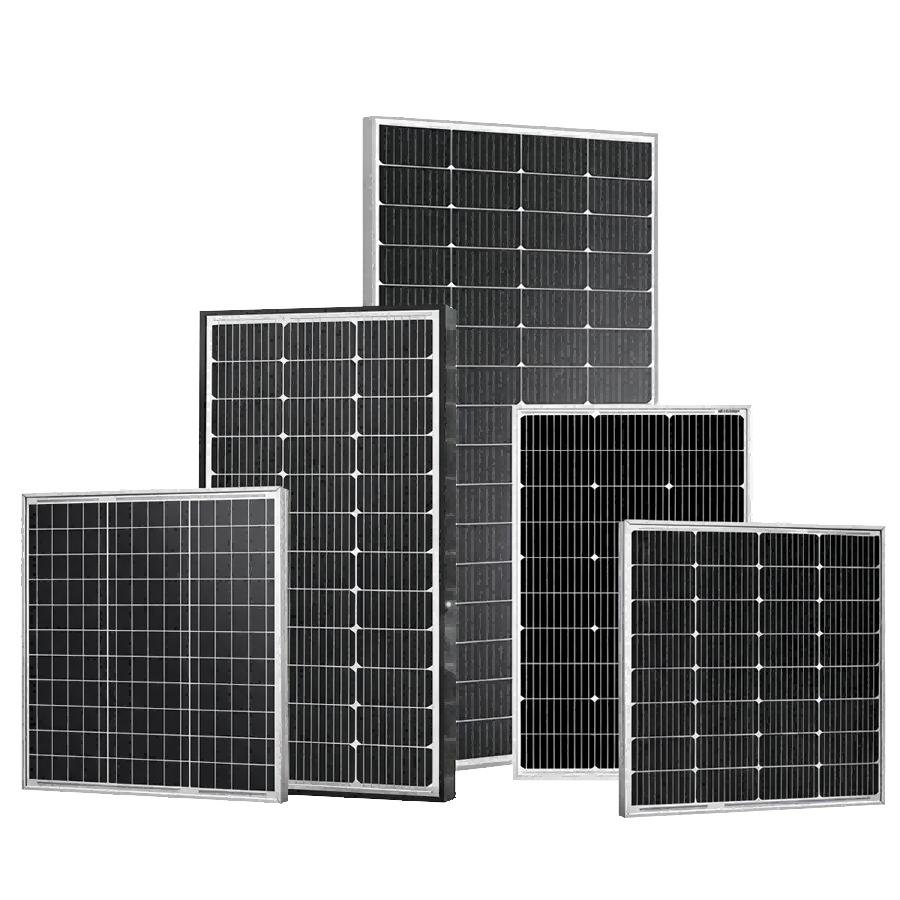
Solar Panels
Framed solar modules for rooftops, vehicles and fixed installations.
Reference module range · 5–705 WExplore range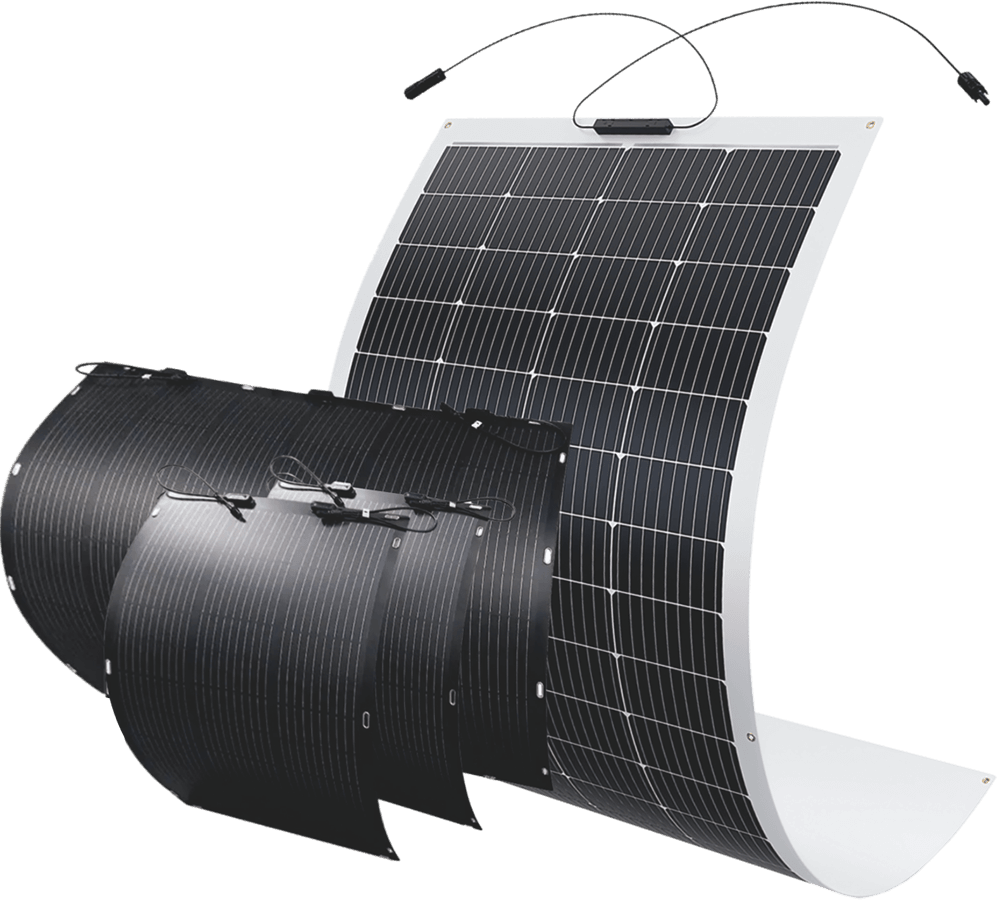
Solar Panels
Solar module selection for mobile and space-constrained installations.
Reference module range · 10–400 WExplore range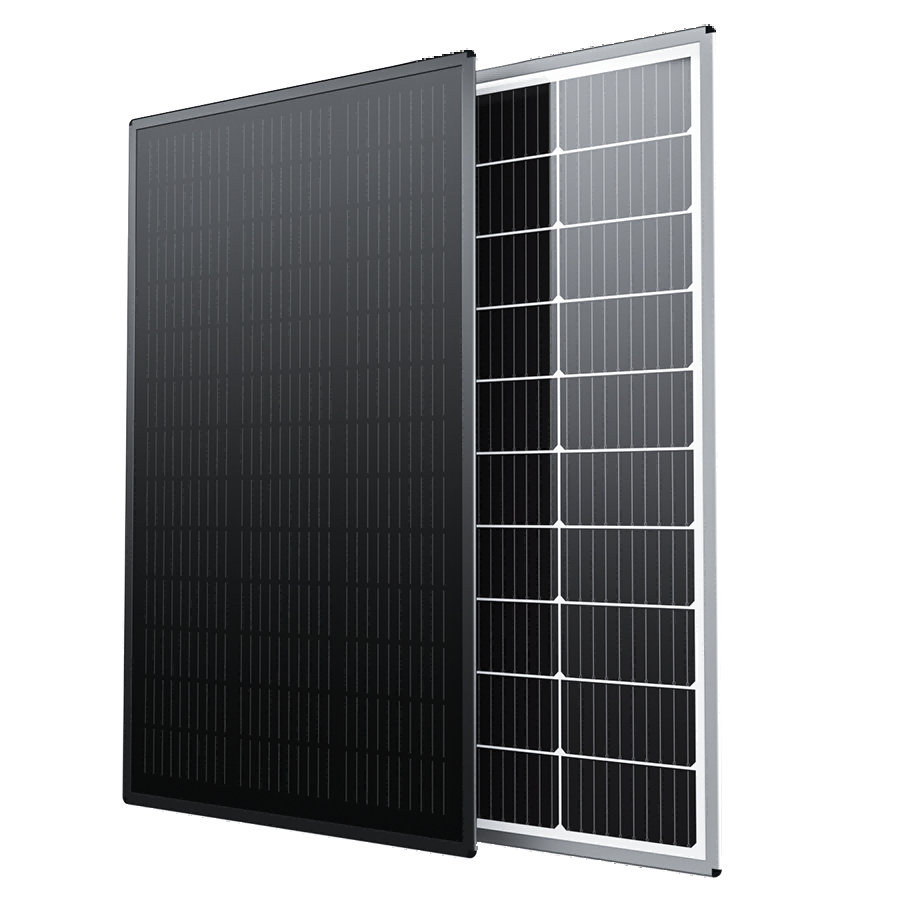
Solar Panels
Slim framed modules for vehicles, balconies and compact roof layouts.
Reference module range · 20–300 WExplore rangeYOUR NEXT ENERGY PROJECT
Share your application, market and requirements.
MODULE SELECTION & OEM REVIEW
A foldable system combines a deployed solar area with a practical packed footprint. Define the folding layout, handles, support method and connection route. Check the power station or controller input limits before selecting panel ratings.
Request both dimensions, total weight, panel count and carrying arrangement.
Confirm stands, positioning, cable reach and conditions of use.
Supply the receiving equipment model, voltage and current limits, connector and polarity.
Portable describes how the system is used; not every portable panel has the same folding construction. Start with the equipment you want to charge, the daily energy requirement and the space available for transport and deployment.
Confirm the exact power station, battery charger or device and its accepted solar input.
Define transport size, weight, setup method and cable length.
Ask for model-specific handling, weather exposure and storage instructions.
BEFORE YOUR FIRST ORDER
Sample quantity, minimum order, sample cost and customisation depend on the proposed model. Request these with your quotation.
Provide the quantity and destination. Confirm readiness, shipping terms and delivery schedule in writing before ordering.
Review the exact model datasheet, applicable supporting documents and written warranty terms.
Documents ↗ Warranty ↗