
Battery planning
LiFePO4 battery sizing for an RV project
List each appliance’s power in watts and its expected operating hours.
Buyer takeaway: List each appliance’s power in watts and its expected operating hours. Multiply watts by hours to estimate energy in watt-hours, then add the loads. For example, a 60 W load used for five hours consumes 300 Wh before system losses. Include the equipment’s actual usage pattern rather than assuming every load operates continuously.
Estimate daily energy use
List each appliance’s power in watts and its expected operating hours. Multiply watts by hours to estimate energy in watt-hours, then add the loads. For example, a 60 W load used for five hours consumes 300 Wh before system losses. Include the equipment’s actual usage pattern rather than assuming every load operates continuously.
Distinguish stored energy from usable energy
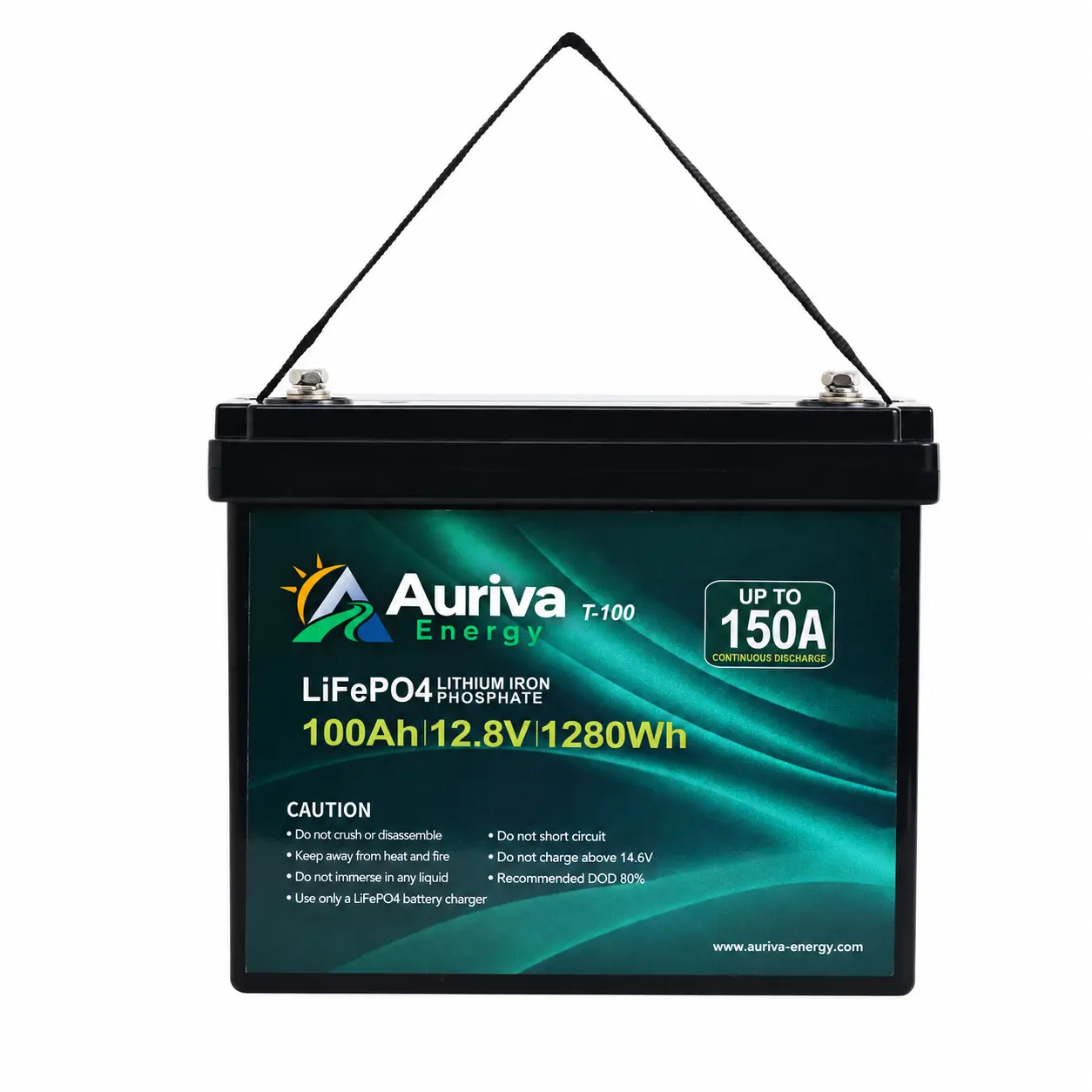
Nominal energy is battery voltage multiplied by amp-hour capacity. A 12.8 V, 100 Ah battery has a nominal 1,280 Wh. The energy available to appliances depends on usable state-of-charge limits, conversion losses, temperature and operating conditions. Nominal capacity is not an assurance of a particular runtime.
Check current and starting demands
Check the battery’s continuous discharge limit and any specified peak-current duration against the inverter and appliances. A high capacity in amp-hours does not automatically provide enough current for a large inverter. Review cable, fuse and isolation requirements as part of the same design.
Check charging and physical fit
Confirm charging voltage, permitted charging current and temperature limits. Include the battery enclosure and terminal clearances in the compartment drawing. Check weight, fixing, ventilation and the applicable installation instructions. Monitoring and parallel operation must follow the exact model documentation.
Match the complete RV system
Share daily energy use, desired time away from shore power, roof solar capacity and charging sources. Auriva can discuss the listed battery models with the solar controller and inverter options. Local stock, warranty and service arrangements require confirmation for the selected product and delivery destination.
Frequently asked questions
Are amp-hours enough to compare batteries?
Compare voltage and energy as well as current limits, usable capacity, dimensions and charging requirements.
Is the five-year battery warranty a warranty for every Auriva product?
No. Warranty terms are specific to the selected product and written supply agreement.
Continue your project review
Explore the related product ↗ Request model documents ↗ All technical articles ↗
AURIVA ENERGY
A specification we can review together.
Send the model, application, destination and required quantity.